
Weaver is a free daily word ladder game where you change one letter at a time to climb from a given start word to a given target word. It runs on the same century-old puzzle idea as Poople, so if you already play one, the other will feel familiar within about ten seconds. This guide covers the rules exactly as the game enforces them, walks through a full solve on video, and then digs into what actually separates the two games, using numbers pulled from Weaver’s own dictionary and its full puzzle archive.
What Is Weaver?
Weaver is a browser word ladder game published at wordwormdormdork.com. Each day it gives you a fixed start word at the top of the board and a fixed target word at the bottom, and leaves you to fill in the rows between them. Every row you type has to differ from the row above it by exactly one letter, and every row has to be a real word. That is the classic word ladder rule set, unchanged.
The game credits its own origin on the How To Play screen: this is Lewis Carroll’s puzzle from 1877, which he called Doublets. If you want the full story of how a Victorian parlour game became a browser habit, the history of word ladders covers it.
Weaver is free, needs no account to play, and resets on a daily timer. Signing in is optional and only exists to sync your streak across devices.
The same publisher runs two sibling games, which is worth knowing so you land on the right one:
- Weaver is the standard ladder, where every move changes exactly one letter and the word length stays fixed for that day’s puzzle.
- Weaver X loosens the core rule: you may change one letter, add one letter, or remove one letter, so the word length shifts as you go. A recent puzzle ran BACK to PORCH.
- Subtext is not a ladder at all. It asks how many words you can make, which is a different genre entirely.
Everything below is about standard Weaver.
How Many Letters Are Weaver Words?
This trips up a lot of write-ups, including two of our own, which we have now corrected. Weaver does not use a single fixed word length. It alternates between four-letter and five-letter puzzles from one day to the next.
It did not start that way. The first 621 puzzles were all four letters, beginning with RAIN to SNOW on day one. Five-letter puzzles arrived at puzzle 622, TRICK to TREAT, and the two lengths have been mixed ever since. Across the 1,007 puzzles published since that switch, 611 have been four letters and 396 have been five, so a given day is roughly 40 percent likely to be a five-letter puzzle. Over the full archive of 1,628 puzzles, 76 percent are four letters.
The practical consequence is that you cannot assume a length before the board loads. Check the start word first.
The Rules of Weaver
The in-game rules are two sentences long. Here is what they mean in practice, including the parts the game enforces without spelling out:
- Change exactly one letter per row. You cannot add a letter, drop a letter, or rearrange the ones already there. That last restriction catches people out: SNAIL and SNAILS are not one move apart, and neither are LEAST and STEAL.
- Every row must be a real word. Weaver checks each entry against a dictionary it downloads when the page loads. If the word is not in that list, the row is rejected and you try again.
- Word length is fixed within a puzzle. Whatever length the start word is, every row holds that length through to the target. What changes is which length you get on a given day, as covered above.
- You must type the target word yourself. This one surprises most new players. Reaching a word that sits one letter away from the target does not end the puzzle. The bottom row is a preview of where you are heading, and you still have to enter it as your final move to finish.
- Fewer moves is better. When you solve it, the game shows Today’s Optimal next to Today’s Score, so you find out immediately whether you matched the shortest possible path.
There is no move limit and no penalty for a rejected word, so Weaver is forgiving to experiment in. The only thing being measured is how many rows you used.
That is the whole of how to play Weaver. Everything below is about playing it well.
Watch a Full Weaver Playthrough
Here is a complete solve of puzzle 1627, the Weaver for August 1, 2026, recorded in a browser, with a short narration and captions. It landed on a five-letter day: the start word is SNAIL and the target is SLIME. Watch the tiles on the left fill in row by row, and notice how the game shades a letter green as soon as it matches the target and boxes the letter that changed on each move.
Video transcript
Weaver gives you a start word and a target word. Change one letter per row, and every row has to be a real word. Letters lock green as they match the target, so the path shows itself. This one took seven moves, matching the day's optimal.
The Solve, Step by Step
The full path takes seven moves:
SNAIL → SNARL → SNARE → SPARE → SPIRE → SPICE → SLICE → SLIME
Here is the reasoning behind each one, because the interesting part of a word ladder is rarely the answer itself.
| Move | Word | What changed | Why |
|---|---|---|---|
| 1 | SNARL | I becomes R | SNAIL has very few legal neighbours. This is essentially the only useful door out. |
| 2 | SNARE | L becomes E | Locks in the final E, which the target also ends in. |
| 3 | SPARE | N becomes P | Clears the N so the middle of the word can start moving. |
| 4 | SPIRE | A becomes I | Locks in the I that SLIME needs in the middle. |
| 5 | SPICE | R becomes C | Sets up the last two swaps. |
| 6 | SLICE | P becomes L | Locks in the L. |
| 7 | SLIME | C becomes M | The final letter, and the move that ends the puzzle. |
Two things are worth pulling out of that table.
First, the opening move is nearly forced. SNAIL sits in a thin part of the word graph, and SNARL is the only step that leads anywhere useful. Word ladders often start this way: the first move feels like a guess, and it is really the only option.
Second, notice the shape of the solve. Moves 2 through 6 each lock in one letter that the target needs and never touch it again. That is the difference between solving a ladder and wandering through one.
Weaver rated this puzzle’s optimal at seven moves. To check that independently, we ran a breadth-first search over Weaver’s own dictionary before recording, and it also returned seven, by the same route. If you want to do this kind of pathfinding on Poople puzzles, the word ladder solver will map a route between any two valid words.
Weaver Strategy That Works
Most word ladder advice applies here, with one Weaver-specific wrinkle: because you can see the target from the start, you have information a hidden-word game never gives you. Use it.
- Read the target first. Before typing anything, compare the start and target letter by letter and note which positions already agree. SNAIL and SLIME share only the S. That tells you four letters have to move, so a very short solve was never available.
- Lock letters in and leave them. Every move should ideally fix one target letter permanently. If you find yourself changing a letter you already set correctly, you have lost a move.
- Swap vowels when you stall. More real words share a vowel pattern than an exact consonant pattern, so a vowel swap usually opens more doors than a consonant swap.
- Work backwards from the target when the front end is stuck. The path from the target is often more open than the path from the start, and the two halves tend to meet in the middle.
- Do not fear the rejected word. Nothing is scored except your row count, so probing for legal words costs you nothing.
Weaver vs Poople
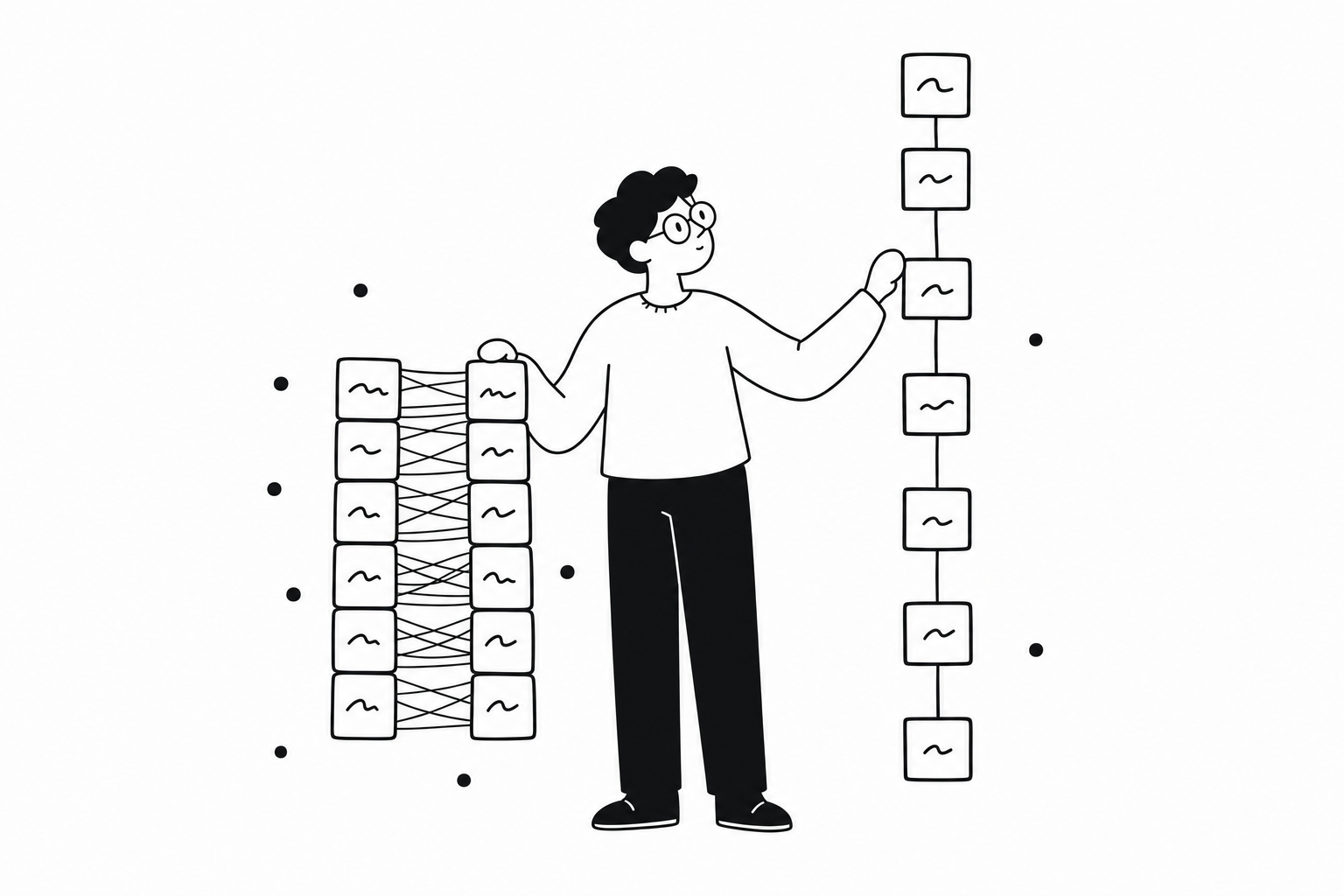
Both games are true word ladders. What differs is everything around the ladder, and those choices change how each one feels day to day.
| Poople | Weaver | |
|---|---|---|
| Word length | Always four letters | Four or five, varying by day |
| Target | Always POOP | A new target every day |
| Dictionary | 2,398 words, every one reachable from the target | A 77,368-word general list filtered by length |
| Dead ends | None, they are pruned out in advance | Present, and more common at five letters |
| Par | Precomputed shortest distance, shown as par | Today’s Optimal, revealed after you solve |
| Beyond the daily | Unlimited mode with random ladders on demand | A numbered archive of 1,628 past puzzles |
The fixed target is the real design split. Because Poople always ends on POOP, the puzzle becomes a familiar landscape: play for a week and you start recognising the same hub words funnelling you toward the same finish, so improvement comes from knowing the terrain. Weaver changes both ends every day, so you never build that map, and each puzzle is closer to a cold read.
The dictionary choice follows from that. Poople’s word list was built by walking outward from POOP and keeping only words that can actually reach it, which is why it holds no dead ends at all and why its average word has 9.14 legal moves available. Weaver filters a general English word list by length, so its board can contain words that lead nowhere. Both approaches are defensible. One guarantees every puzzle is solvable from any word you might wander into, the other keeps the vocabulary wide and lets you find the cliffs yourself.
The varying word length is the other real difference, and it is the reason Weaver’s difficulty swings more from day to day. Poople’s four-letter format means the terrain is always the same shape. A Weaver five-letter day is a measurably harder puzzle than a Weaver four-letter day, which the next section quantifies.
If you want a broader survey rather than a head to head, 17 games like Wordle ranks the field by how close each game sits to Wordle’s format, and the best daily word games groups the same pool by mechanic instead.
Why Five-Letter Ladders Are Harder Than Four
This is the part most comparisons hand-wave, so we measured it. Weaver downloads its dictionary as a plain JSON file, which makes it straightforward to build the underlying word graph and count what is actually there. Below, every row uses that same dictionary, with only the word length changing, so length is the only variable.
| Length | Words | Legal moves | Moves per word | Dead ends | Average solve |
|---|---|---|---|---|---|
| Four | 2,639 | 11,841 | 8.97 | 3.4% | 5.41 |
| Five | 5,074 | 11,988 | 4.73 | 13.1% | 8.40 |
| Six | 8,202 | 11,218 | 2.74 | 27.9% | 11.24 |
The middle columns are the story. Going from four letters to five nearly doubles the vocabulary, from 2,639 words to 5,074, while the number of legal moves between those words barely moves at all, from 11,841 to 11,988. Twice the words, the same number of doors. The average five-letter word therefore has 4.73 moves available where a four-letter word has 8.97.
Push to six letters and it inverts completely. The six-letter set holds more than three times as many words as the four-letter set and yet has fewer connections between them, 11,218 against 11,841. The graph falls apart as a result: at four letters a single connected group covers 94.4 percent of the words, so almost any pair can reach each other, while at six letters the largest group holds just 42.2 percent. Longer words mean more vocabulary and less connectivity, because the longer a word gets, the less likely another real word sits exactly one letter away.
That is why a five-letter ladder feels harder than a four-letter one even when both look equally simple. The extra letter matters far less than the thinning graph behind it: roughly one in eight five-letter words is a dead end, against one in thirty at four letters, and the typical solve runs 8.4 moves instead of 5.4.
The same arithmetic explains a design decision inside Poople that is invisible while playing. Poople’s 2,398-word dictionary averages 9.14 moves per word against 8.97 for the full four-letter set, and contains zero dead ends, because words that cannot reach POOP were removed before the game ever shipped. The engineering write-up on how Poople was built covers how that graph was generated.
The Puzzle Archive Agrees
Graph averages are one thing. Weaver’s actual published puzzles are a useful check on them, because every puzzle ships with its own optimal solution. Measuring all 1,628 of them:
| Weaver puzzles | Count | Average optimal solve | Longest |
|---|---|---|---|
| Four-letter days | 1,232 | 5.31 moves | 10 moves |
| Five-letter days | 396 | 6.84 moves | 12 moves |
A five-letter Weaver takes about 1.5 moves more than a four-letter one on average, and its hardest days run two moves longer. Both figures sit below the whole-dictionary averages above, which makes sense: puzzle days are hand-picked pairs like TRICK to TREAT or GRASS to ROOTS rather than random word pairs, and themed pairs tend to sit closer together than average. The gap between the two lengths survives that selection, which is the point.
So when a Weaver day feels unexpectedly brutal, check the word length before blaming yourself. About two days in five are the harder kind.
Frequently Asked Questions
How do you play Weaver?
Change one letter per row to get from the start word at the top of the board to the target word at the bottom, keeping every row a real five-letter word. Type the target word yourself as your final move to finish the puzzle.
Is Weaver the same as Wordle?
No. Wordle asks you to guess one hidden word from colour feedback. Weaver shows you both the start and the target from the beginning and asks you to find a path between them, one letter at a time. They share a daily rhythm and a tile board, and the puzzle underneath is a different genre.
How many letters are Weaver words?
Weaver alternates between four-letter and five-letter puzzles from day to day. The length stays fixed within a single puzzle. The first 621 puzzles were all four letters, five-letter puzzles arrived at puzzle 622, and since then roughly 40 percent of days have been five letters. Its sibling game Weaver X is different again, since adding and removing letters means the length changes as you solve.
Is Weaver free?
Yes. Weaver is free to play in a browser with no account required. Signing in is optional and only saves your stats across devices.
What is a good Weaver score?
Matching Today’s Optimal, which the game shows you once you solve the puzzle. Across Weaver’s published archive the average optimal is 5.31 moves on four-letter days and 6.84 on five-letter days, so finishing within a move or two of those is a solid result.
Play a Ladder Today
If the ladder mechanic is what hooked you, Poople runs the same idea with one deliberate difference: the target never changes, so the puzzle rewards learning the terrain rather than reading a fresh map each morning. Play today’s Poople and turn a four-letter start word into POOP one real word at a time, or run as many practice ladders as you like in Unlimited mode. New to the format entirely? Start with what a word ladder is, then read the strategy guide for hub words, dead ends, and how par is scored. For a wider directory of daily puzzle games, browse dle games.