
How the word ladder solver picks each move
Every word list on this page is a map. Each word is a place, and two places are joined when they differ by exactly one letter. WARM, for instance, joins ten words in the four letter list.
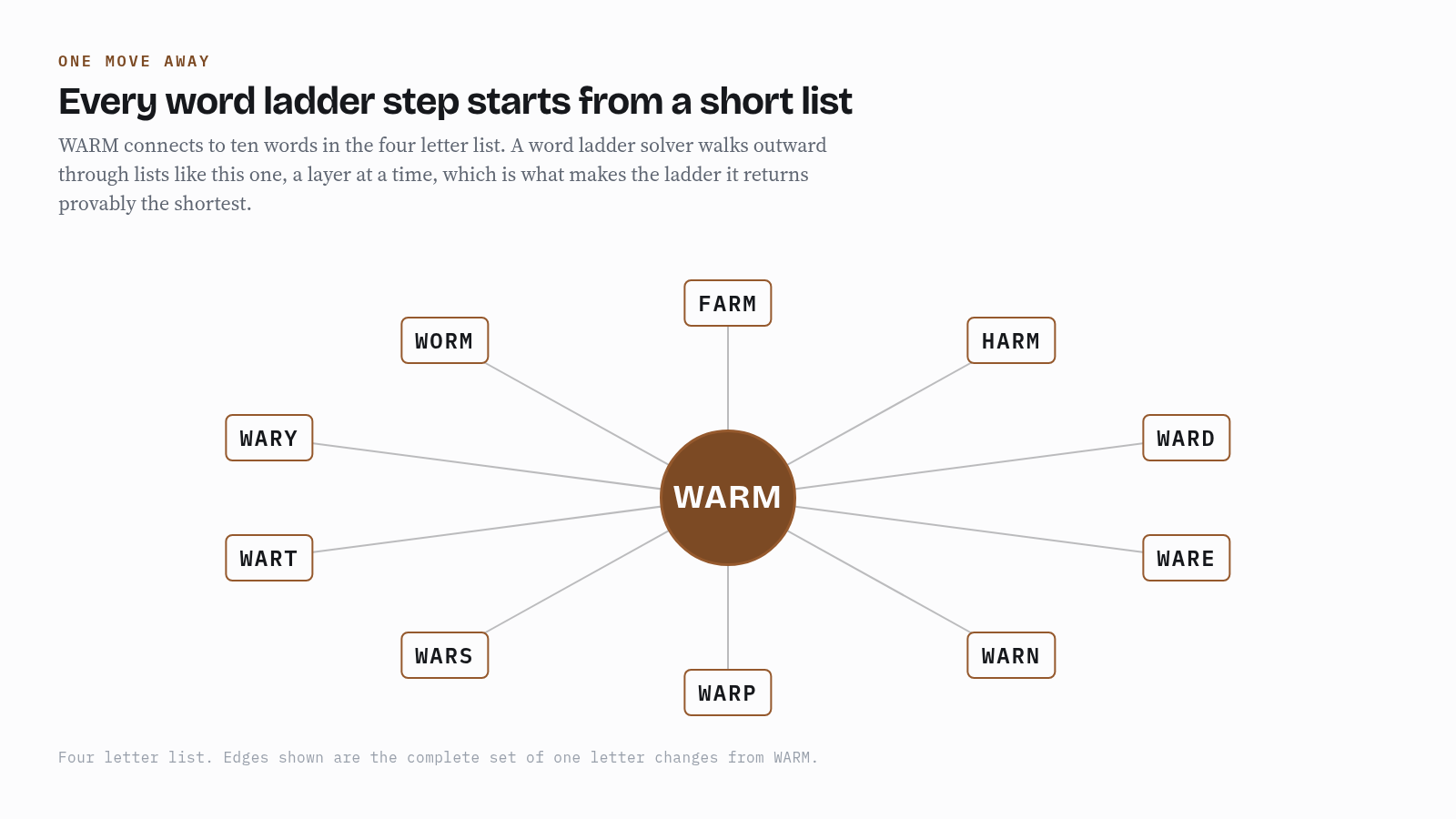
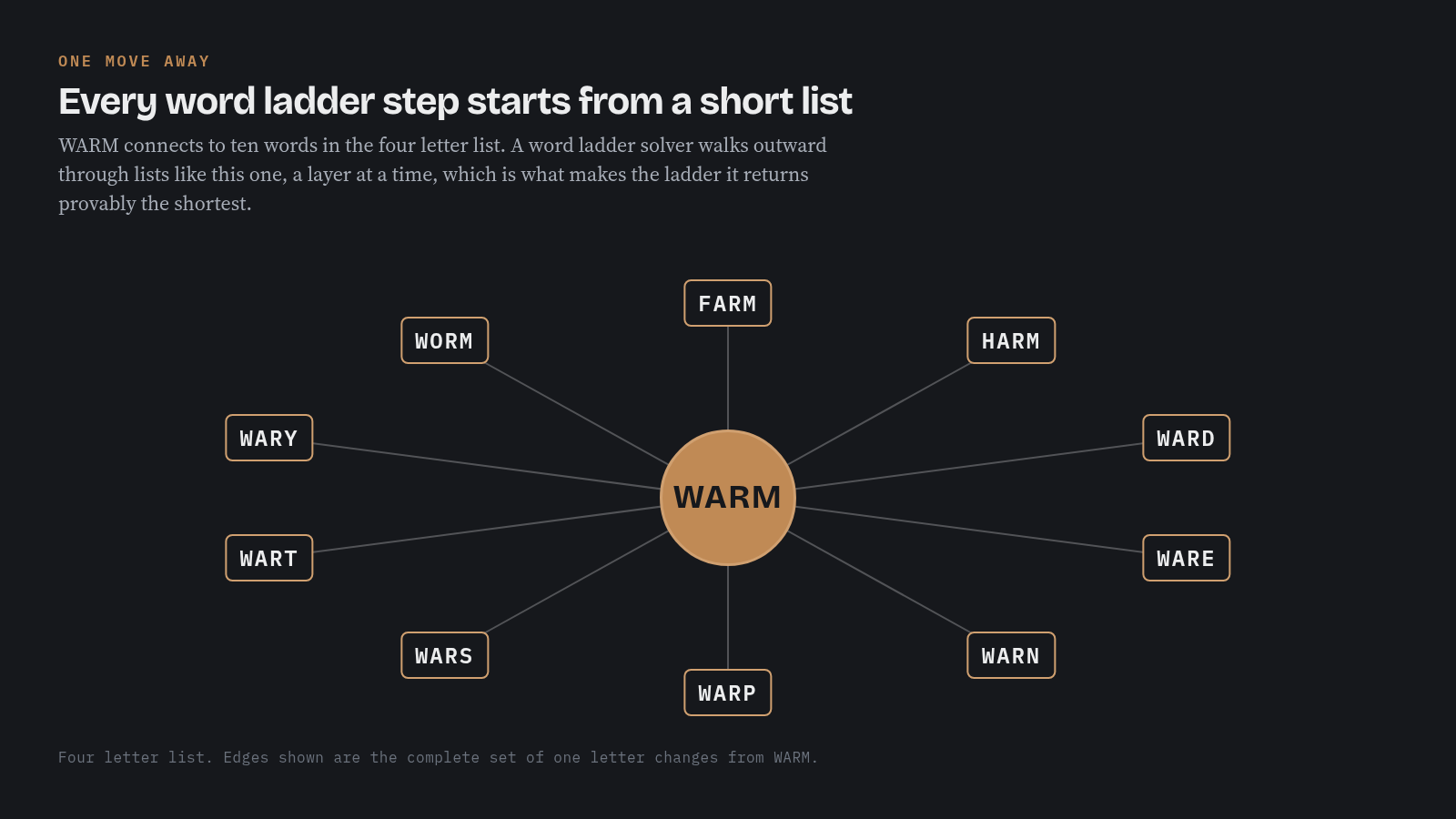
That short list is everything the solver has to choose from at each rung. The solver works outward in rings: every word one move from your start, then every word two moves out, and so on. The first ring to contain your end word is the answer, and by then nothing shorter can have been missed.
Choosing well is harder than it looks, because a single letter change can only do one of three things. It moves you one step nearer the end word, one step further away, or leaves the distance untouched. Take COLD to WARM, four moves, one of the worked examples above. COLD has twelve legal moves:
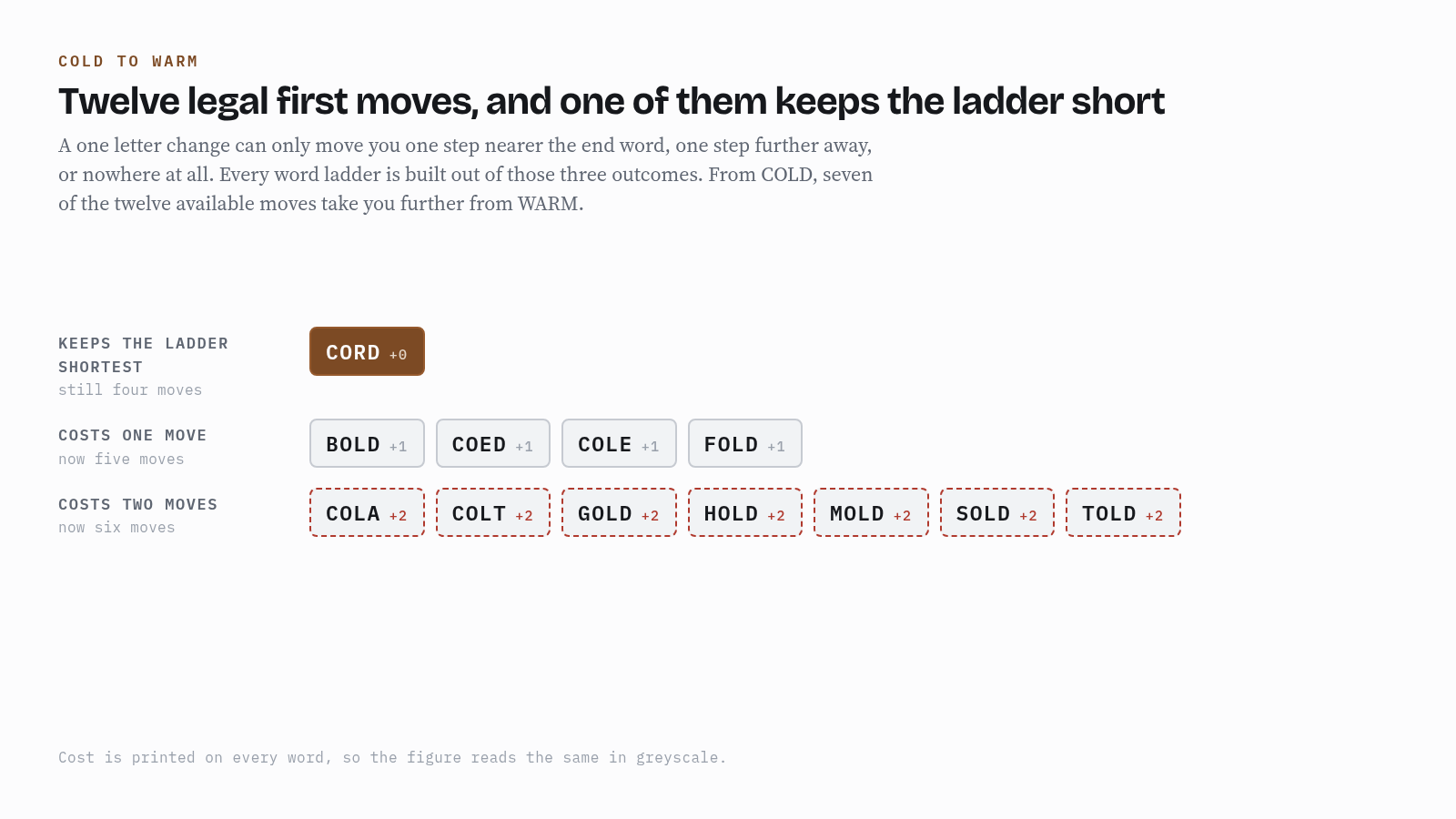
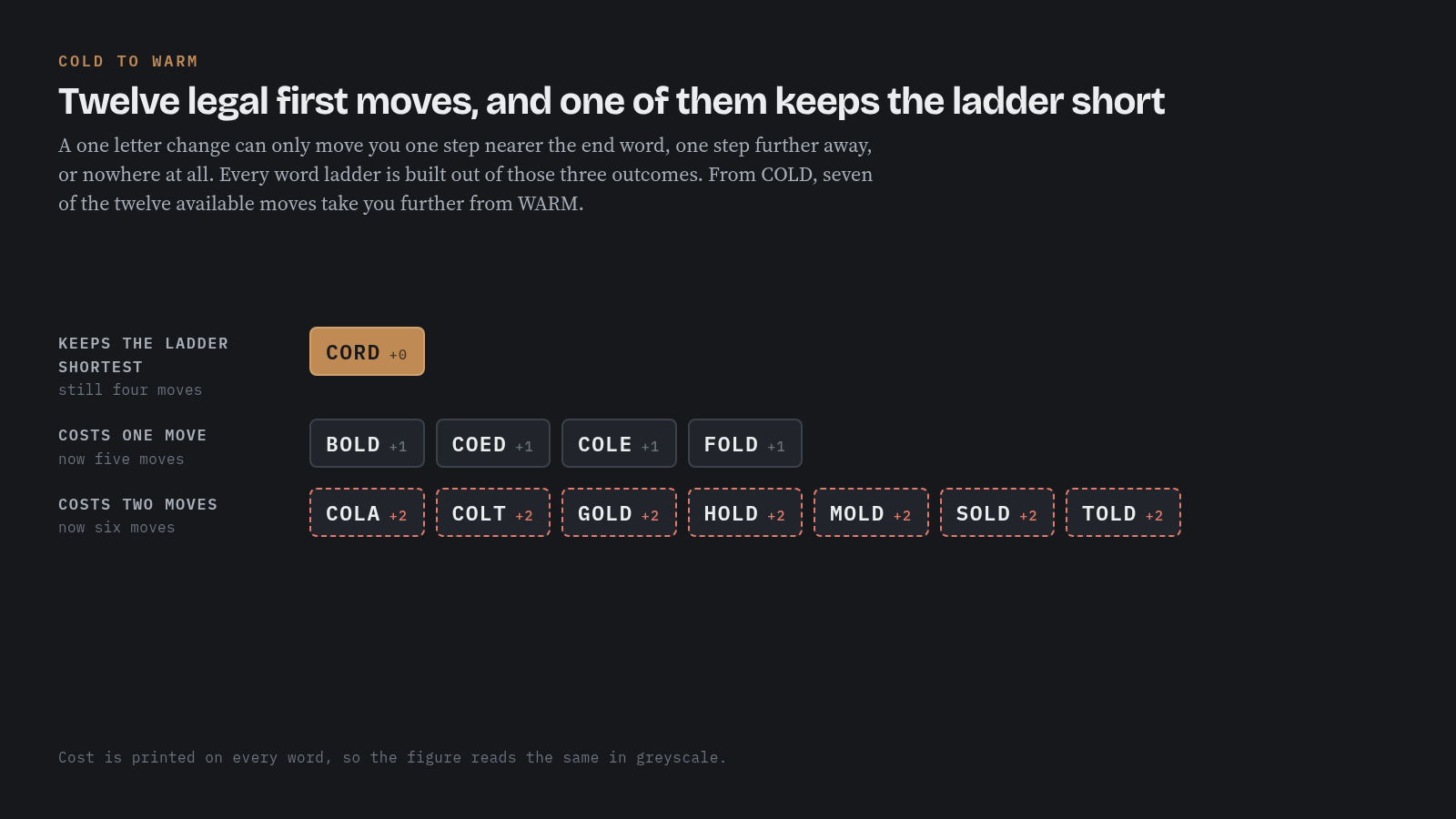
Only CORD keeps the ladder at four. Four moves cost you a step, and seven of the twelve walk away from WARM entirely. GOLD and HOLD feel like obvious moves and are among the worst available. This is the gap the solver closes: it can see which of the twelve is the one, and you cannot, because seeing it means knowing the distance from every one of those words to WARM.
Why word ladder length changes the puzzle
The three word lists behind this word ladder solver do not behave alike, and the difference is not the one people expect. The five letter list is the biggest by far, and it is also the emptiest.
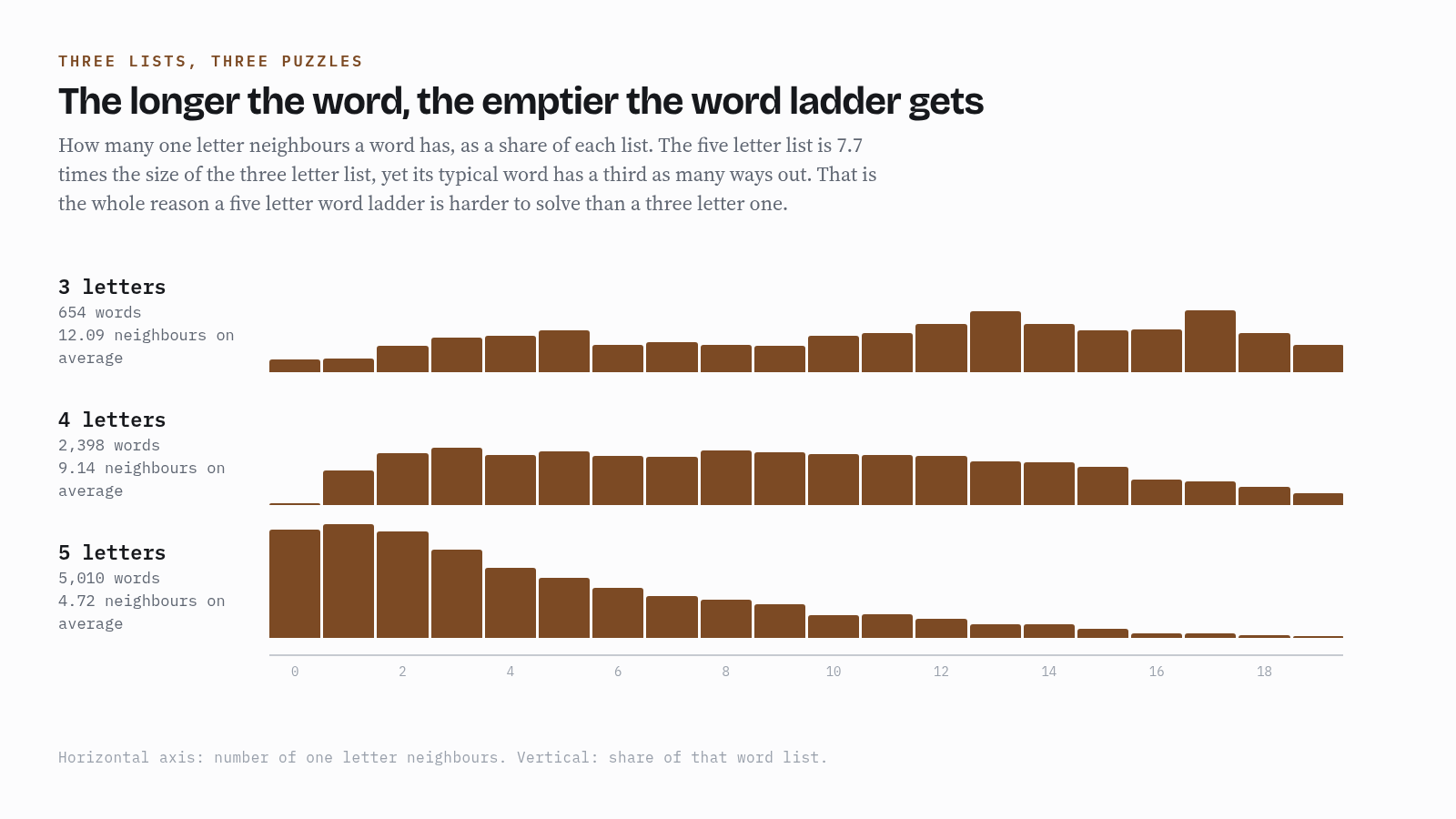
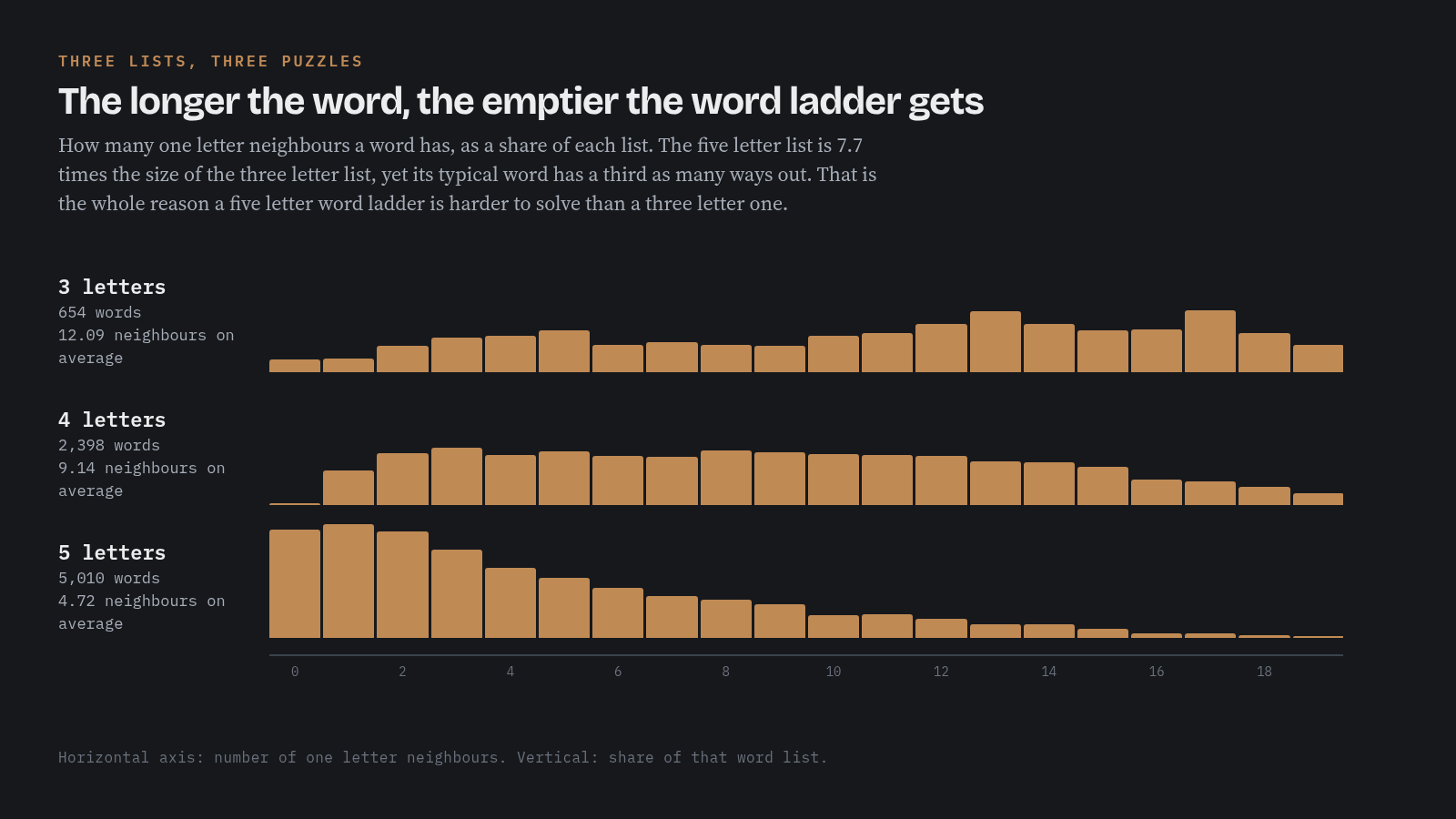
A three letter word has about twelve ways out on average. A five letter word has under five, and the most common count is three. The five letter list holds 5,010 words against 654 for three letters, so it is 7.7 times the size with a third of the connections per word. Longer words are rarer in every direction at once, and a word ladder needs those directions.
That thinning has a consequence you can see the moment a solver search fails.
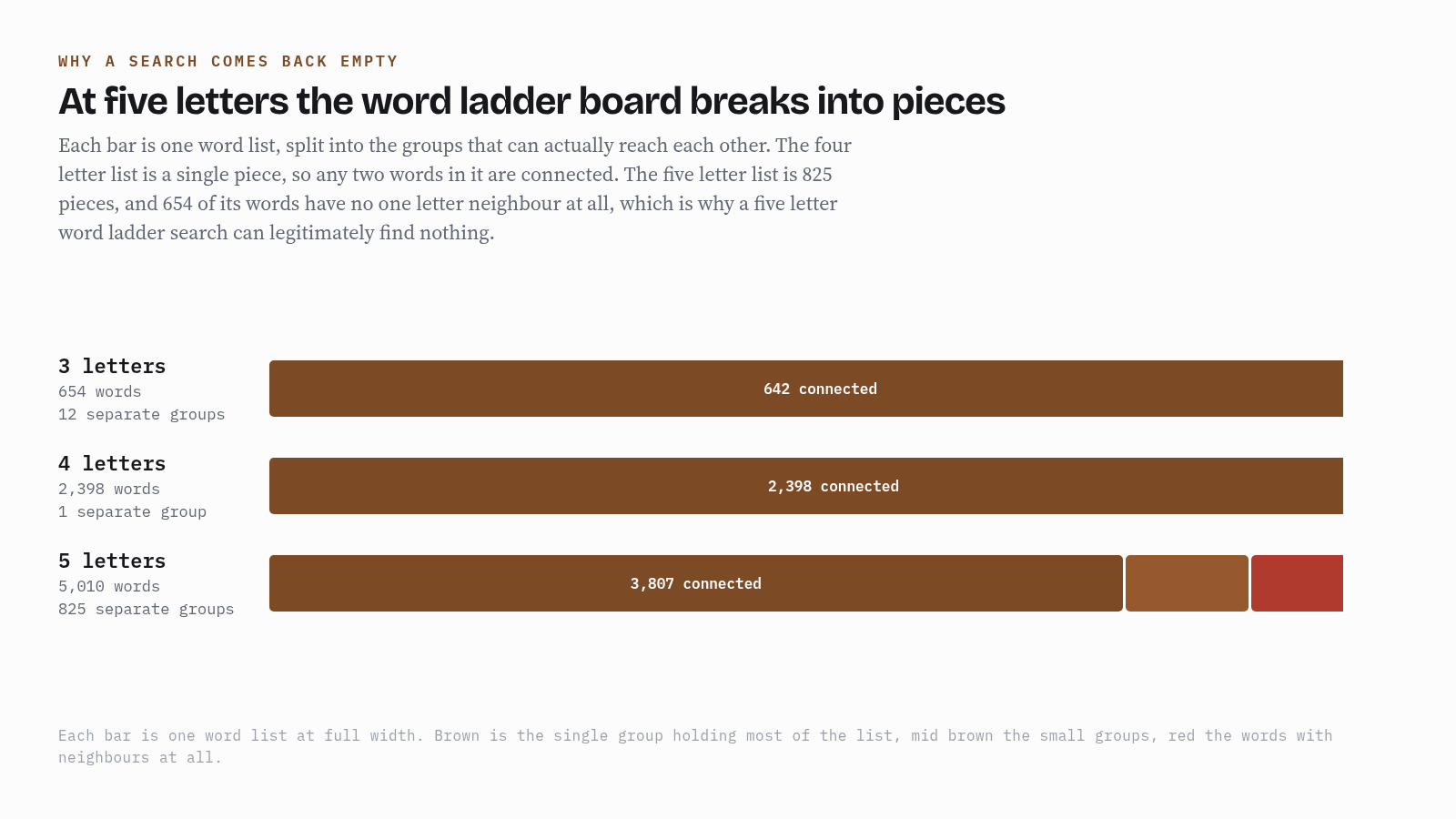
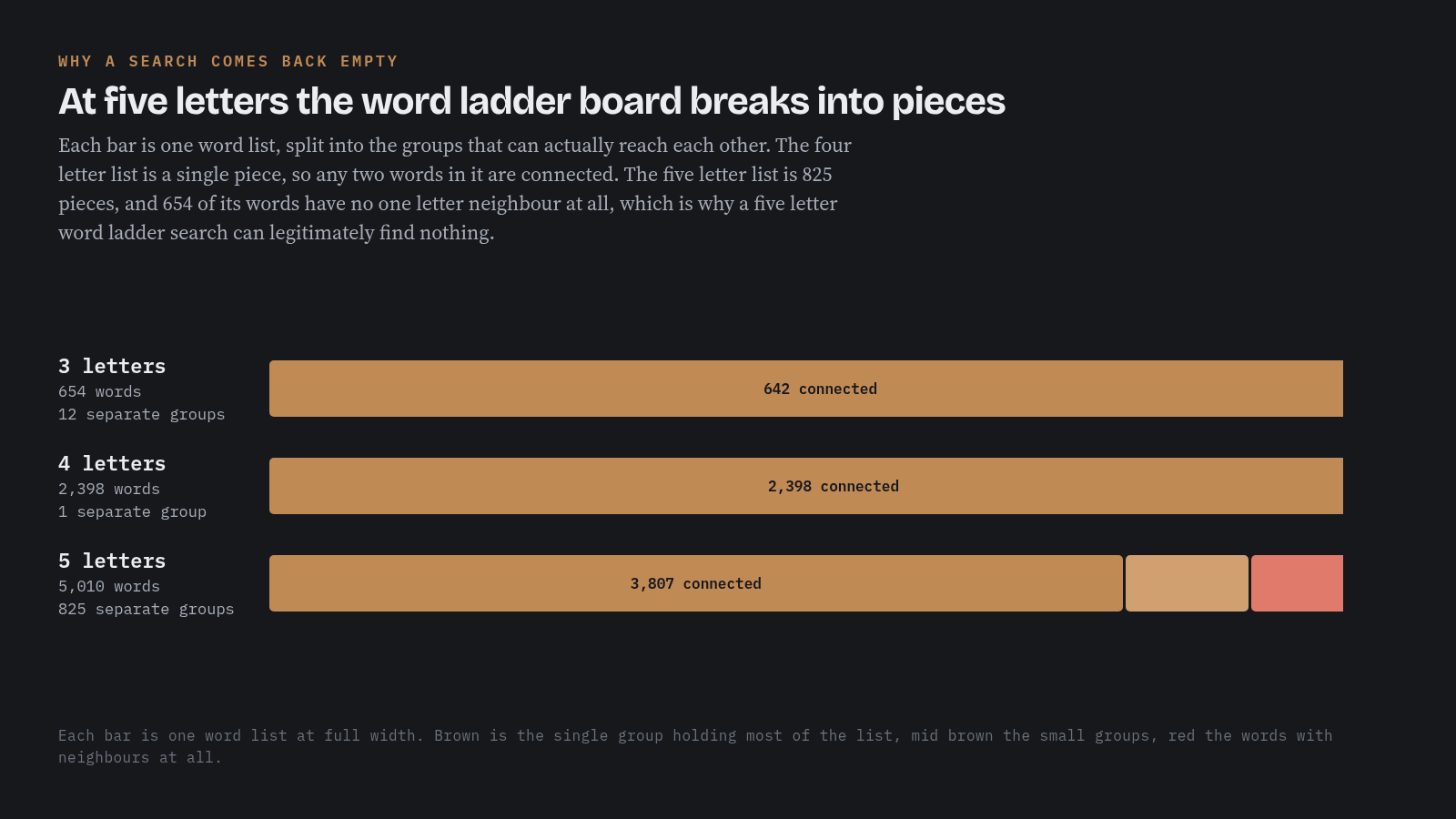
The four letter list is a single connected block, so any two words in it have a ladder between them. The five letter list breaks into 825 separate groups, and 654 of its words have no partner within a single change. When this word ladder solver reports that no ladder connects your two five letter words, that is the map talking, and changing one of the two words usually finds a route.
When several word ladders tie, and when your puzzle names a step count
The shortest word ladder is rarely a single answer. HEAD to TAIL takes five moves, and there are eight different five move ladders. The choice widens to three words in the middle and closes again at the end:
HEAD to HEAL, HEAR or HELD, then on through three more forks to TAIL.
Pick the first route out of a search and you have taken one of those eight without being told the other seven existed. This solver lists them all, so the choice of wording stays yours.
The same number answers a question worksheets and puzzle books keep asking. When a puzzle demands a ladder of a set length, solve it here first and read the move count. If your book wants a seven step ladder and the shortest is five, a seven step version has to wander deliberately, and the two extra rungs are yours to place. If the shortest is longer than seven, no seven step ladder exists and no amount of searching will produce one. This word ladder solver takes two words rather than clue text, so it will not fill in a partly completed grid, but the shortest length it returns is the fact those puzzles turn on.