
Spelling Bee, Letter Boxed, Pips, and Immaculate Grid rarely turn up in the same roundup, and there is a reason for that: three of them share almost nothing mechanically, and the fourth, Letter Boxed, will not even show a logged out visitor a board to look at. Most searches for games like NYT games either fold all four in with Wordle and Connections as if one paywall covers the whole family, or repeat the marketing copy from each game’s own about page without ever actually testing it.
This roundup does neither. We visited all four logged out on the same day, recorded exactly where each one lets a free player in and where it stops them, and picked replacements to match what we actually found instead of what a glance at the marketing copy might suggest. Two of these games cut you off with a subscription screen. The other two don’t charge anything at all; the only thing rationed is how many boards, or guesses, show up per day. Sorted that way, matching alternatives to what actually gates each game starts to make a lot more sense.
What “Free” Actually Means Across These Four Games
NYT Games doesn’t gate its own puzzles the same way twice. Wordle and Connections stay fully open every day, no account required. Spelling Bee lets a session run for a while and then interrupts it partway through, timed to a running score rather than to a fixed number of guesses. Letter Boxed blocks entry before a single word goes in. Pips, as far as we could confirm, doesn’t block anything at all: the only scarcity is that NYT publishes exactly one board per difficulty per day, the same rationing every other daily puzzle on the internet runs on. Immaculate Grid comes from Sports Reference rather than NYT, and it gates nothing either: what limits a free player there is a shared budget of nine guesses per grid instead of a subscription screen.
We didn’t want to lean on account-screen copy alone for the games that still let a logged out player in, so we ran one more check: pull every same-origin script each page loads and search the raw code for the exact strings a paywall interruption would render, if one exists. We proved the method on a game already known to be gated before trusting it anywhere else. Run against Spelling Bee, the scan surfaced the identical two lines that render live on the wall you’ll read below, word for word. Only a search method that can find something real earns the right to make a clean result, elsewhere, count as evidence of anything, which is what makes the negative results on Pips and Immaculate Grid further down worth taking seriously.
Games Like Spelling Bee: The Wall, In Its Own Words
On August 13, 2026, that day’s Spelling Bee puzzle set the center letter to N, ringed by O, Y, A, C, H, and L. The answer key held 39 valid words, worth 182 points between them, and the pangram, a word using all seven letters at least once, was halcyon.
Playing logged out, ten real words landed us at 30 of those 182 points, a rank the game itself calls “Solid.” That’s where play stopped. The interruption reads, in full: “You’re 16 points away from the next rank in today’s puzzle.” followed by “Subscribe to keep playing.” Sixteen points sounds close, and in a sense it is: NYT’s own rank ladder for the day ran Beginner at 0, Good Start at 4, Moving Up at 9, Good at 15, Solid at 27, Nice at 46, Great at 73, Amazing at 91, and Genius, the top rank, at 127. Getting cut off at Solid means the free session ends well under a fifth of the way to Genius, on a day where 39 words were sitting there to be found.
Here is that exact session, stopped right where the wall does:
Video transcript
Spelling Bee hands you seven letters, and every answer has to use the middle one. Three words in, the score has barely moved. Nine words in, twenty five points, rank Good. Thirty points, rank Solid, and the game stops to ask for a subscription.
So a logged out Spelling Bee session is real, and ten words counts as an honest sitting rather than a token gesture. It just has a hard ceiling nowhere near the top of the scale, and that ceiling moves with the day’s word list rather than sitting at a fixed guess count the way most daily puzzles do.
Squaredle keeps the open-ended hunt without the ceiling
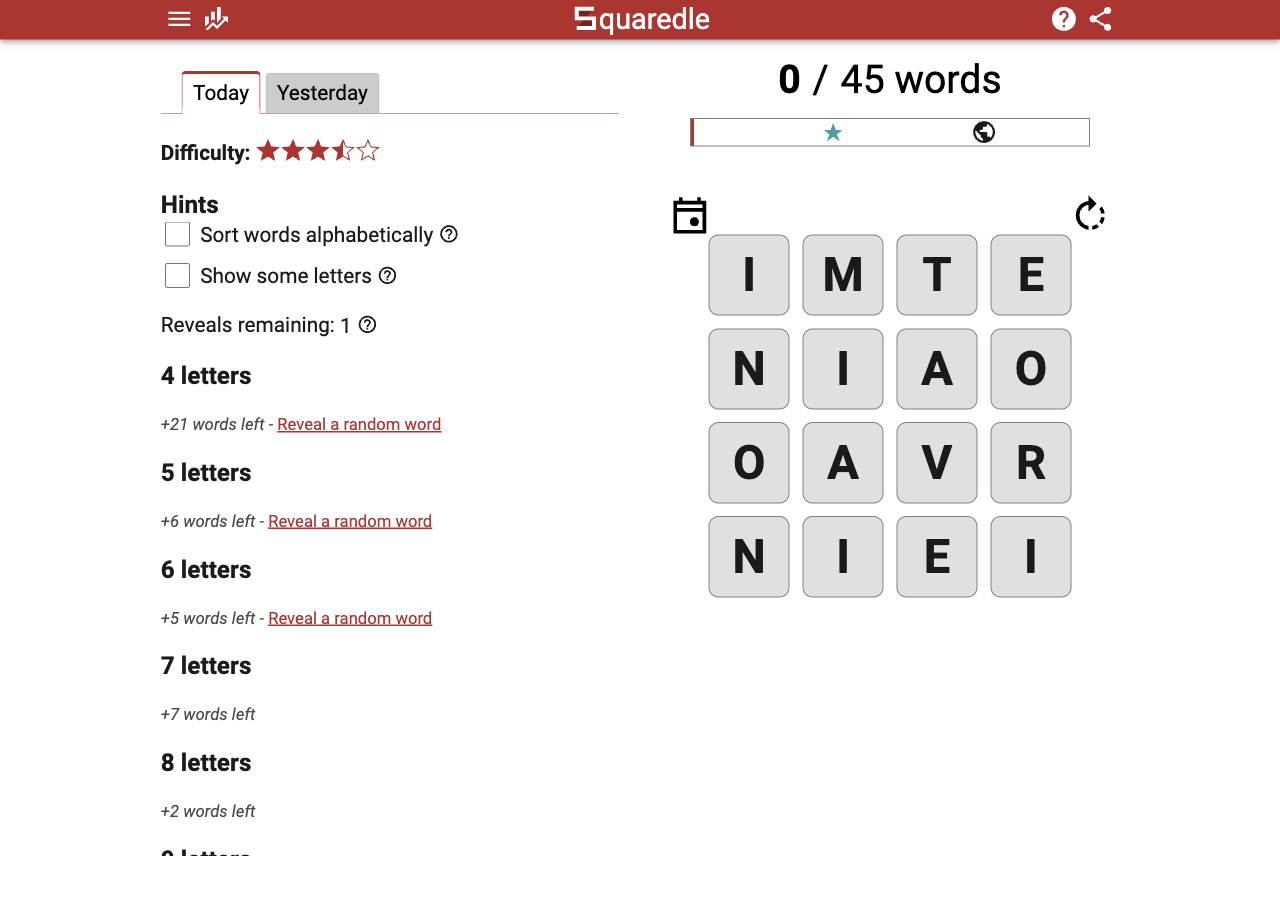
If what pulled you into Spelling Bee was never knowing exactly how many words were left to find, Squaredle keeps that same shape. It drops a dense block of letters in front of you each morning, and the round only ends once you’ve pulled every valid word out of it, no rank ladder standing between you and the finish, no interruption partway through. Play it and browse the rest of the roster on our full dle game list.
Games Like Letter Boxed: No Board At All
Letter Boxed doesn’t ease a free player in the way Spelling Bee does. Visited logged out on the same day, no board renders, full stop. The page’s own embedded data reports isFree as false, and the body copy states the reason outright: “Subscribe to play Letter Boxed.” A “Subscribe to Games” button sits beneath it next to a “Log In” link, and the footer credits constructor Sam Ezersky under a “Powered by Oxford” mark. That matches what the same check found six days earlier, so whatever changes daily inside the puzzle itself, the wall guarding it hasn’t moved.
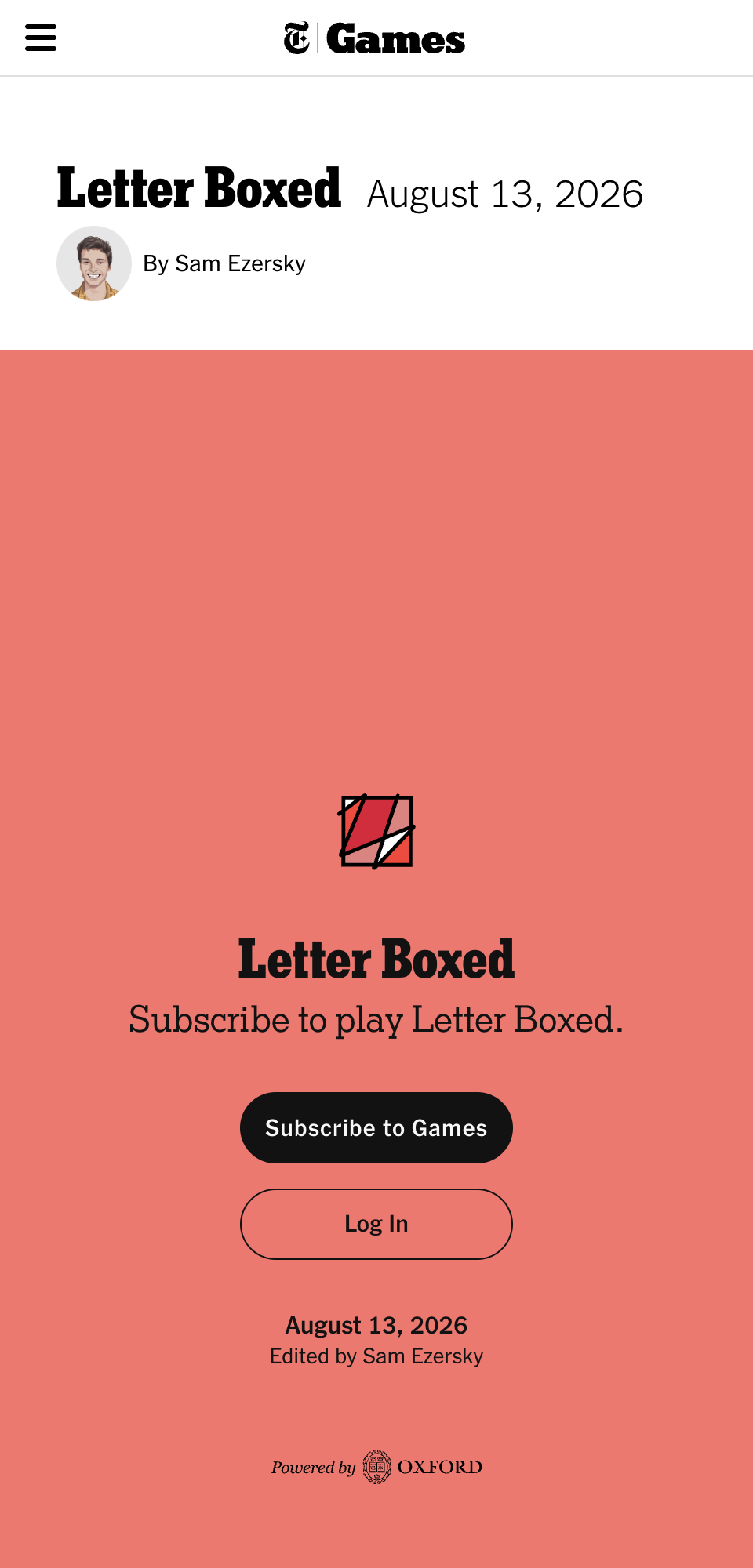
That’s a different failure mode than Spelling Bee’s partial access above: no score to rack up first, no session to log before something interrupts you, just a door that never opens. Replacing this one means replacing the whole mechanic rather than softening a limit.
Squaredle, for the same sustained focus
Letter Boxed keeps a chain of letters live in your head for minutes at a stretch, eyes locked on one board the whole time. Squaredle asks for that identical kind of sustained attention, just spent tracing paths between neighboring tiles instead of looping strokes between two sides of a box. Nothing about the daily puzzle costs money, and unlike Letter Boxed there’s a full history of past boards sitting behind it once you’ve cleared today’s. It’s on the dle game directory along with a play link.
Poople and Weaver, for the letter-chain mechanic itself
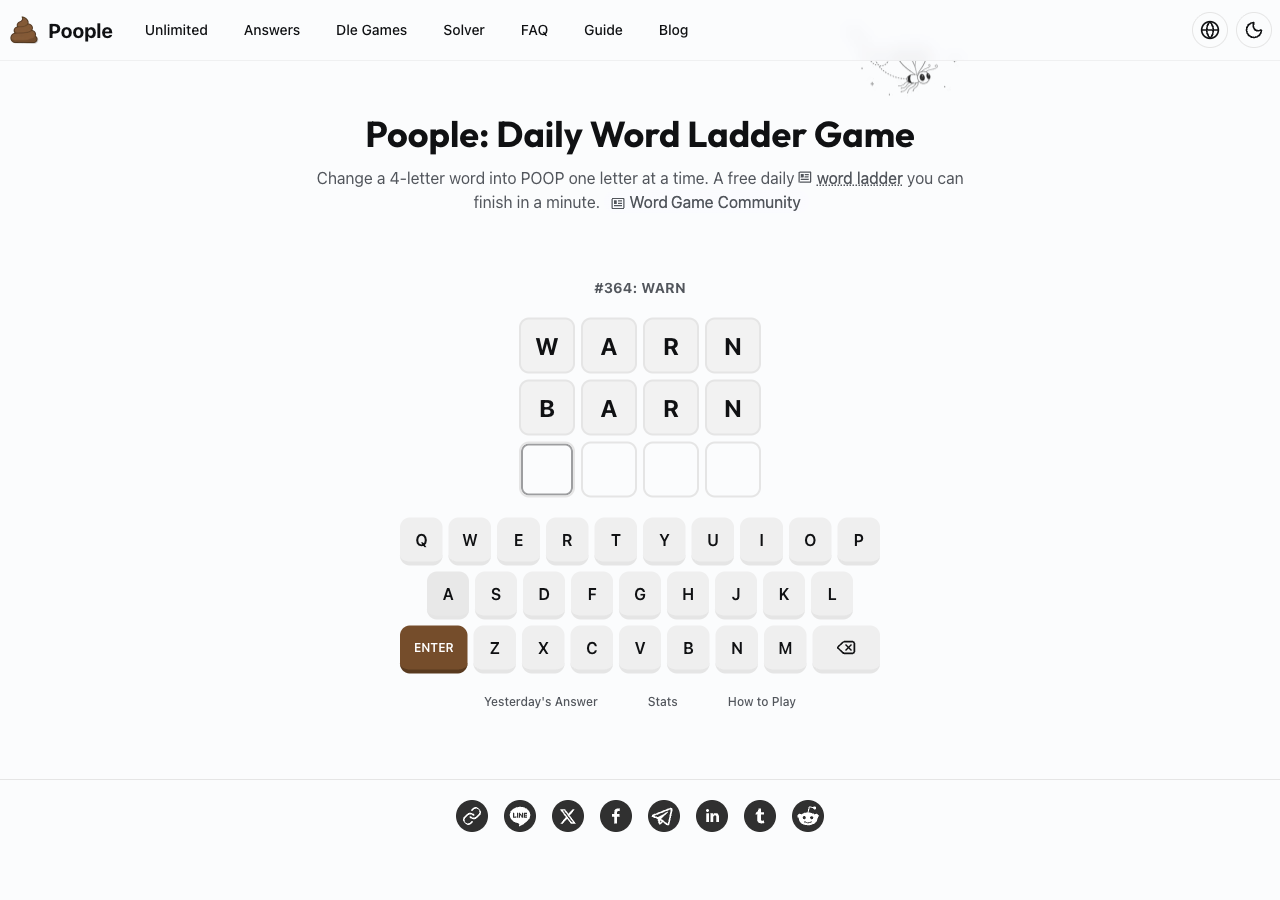
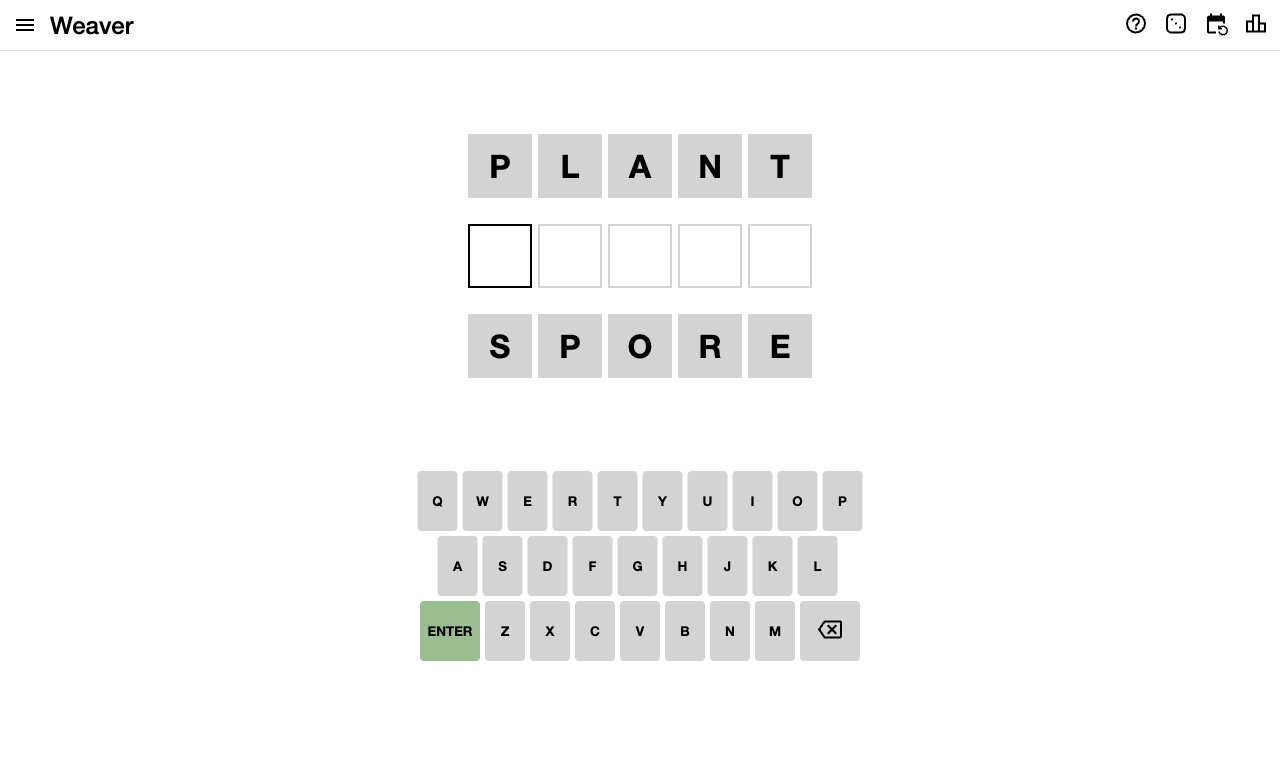
The part that makes Letter Boxed distinctive is that each word has to start on the letter the previous one ended on, so a full solution reads as one unbroken chain rather than a set of separate guesses. Our own site runs a version of that same idea at the word level instead of the letter level: pick a fixed starting word, land on a fixed target, and every stop in between has to be something a real dictionary recognizes. Poople is the daily version of that chain. Weaver, also on the dle games directory, runs the identical idea with a fresh pair of endpoints each day. Neither one scores you on cleverness, only on whether the chain actually holds from one end to the other.
Games Like Pips: Free, Just Rationed by the Day
Pips carries none of the baggage above. The public endpoint that serves each day’s board answers with no isFree flag, no entitlement field, and no mention of a subscription anywhere in its structure, across all three difficulties NYT publishes daily. Running the same script-scanning method described earlier, the one proven first against Spelling Bee’s known-real wall, turned up nothing on Pips either: of sixty loaded scripts, forty-three fetched cleanly from the same origin, adding up to north of six and a half megabytes of code, and none of it matched a single gating string. Two separate checks, both run the exact way they were run against a game already confirmed to be gated, and neither one turned up a wall this time.
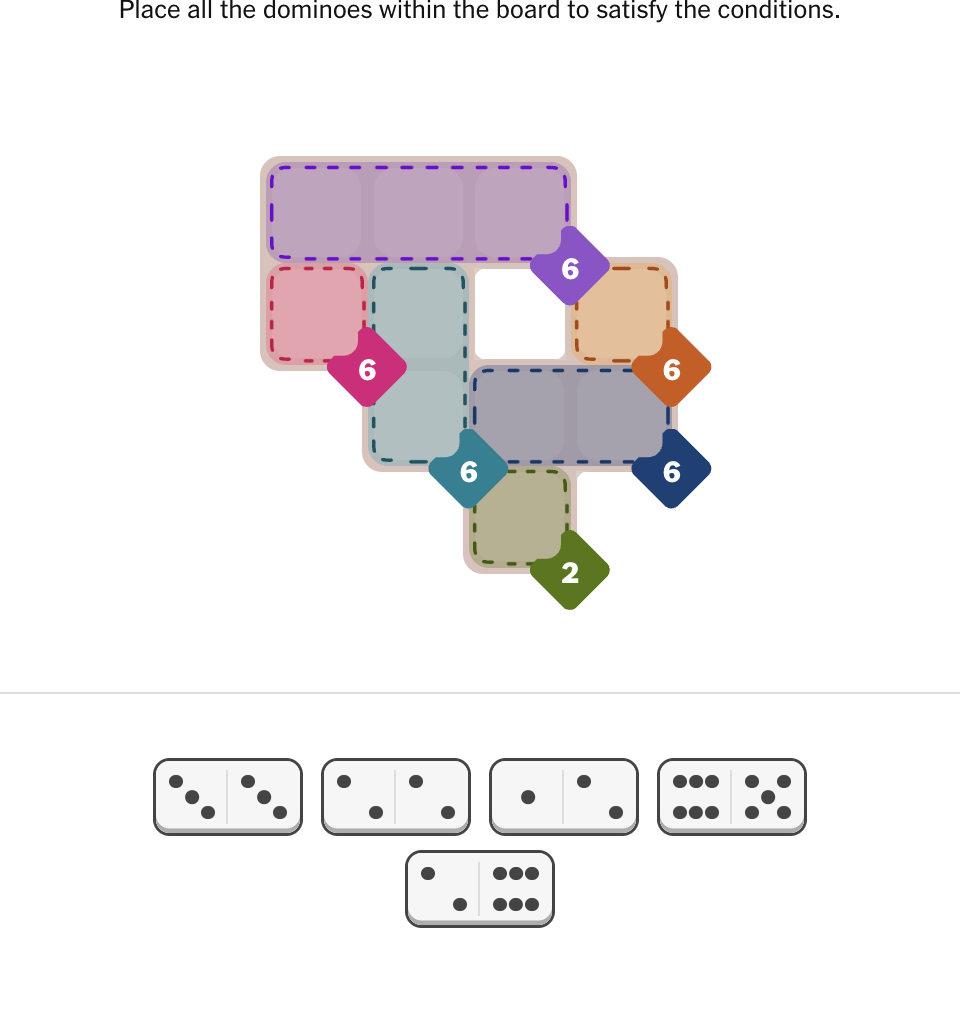
What Pips does share with Immaculate Grid below is a narrower kind of scarcity. Nothing costs money, but NYT puts out one easy board, one medium, and one hard per date, so once you’ve cleared what’s there, the next one is a wait rather than a purchase. That gap is far easier to fill, because plenty of other dle games already run on that identical once-a-day rhythm.
Murdle and Clues by Sam, for the pure-deduction side
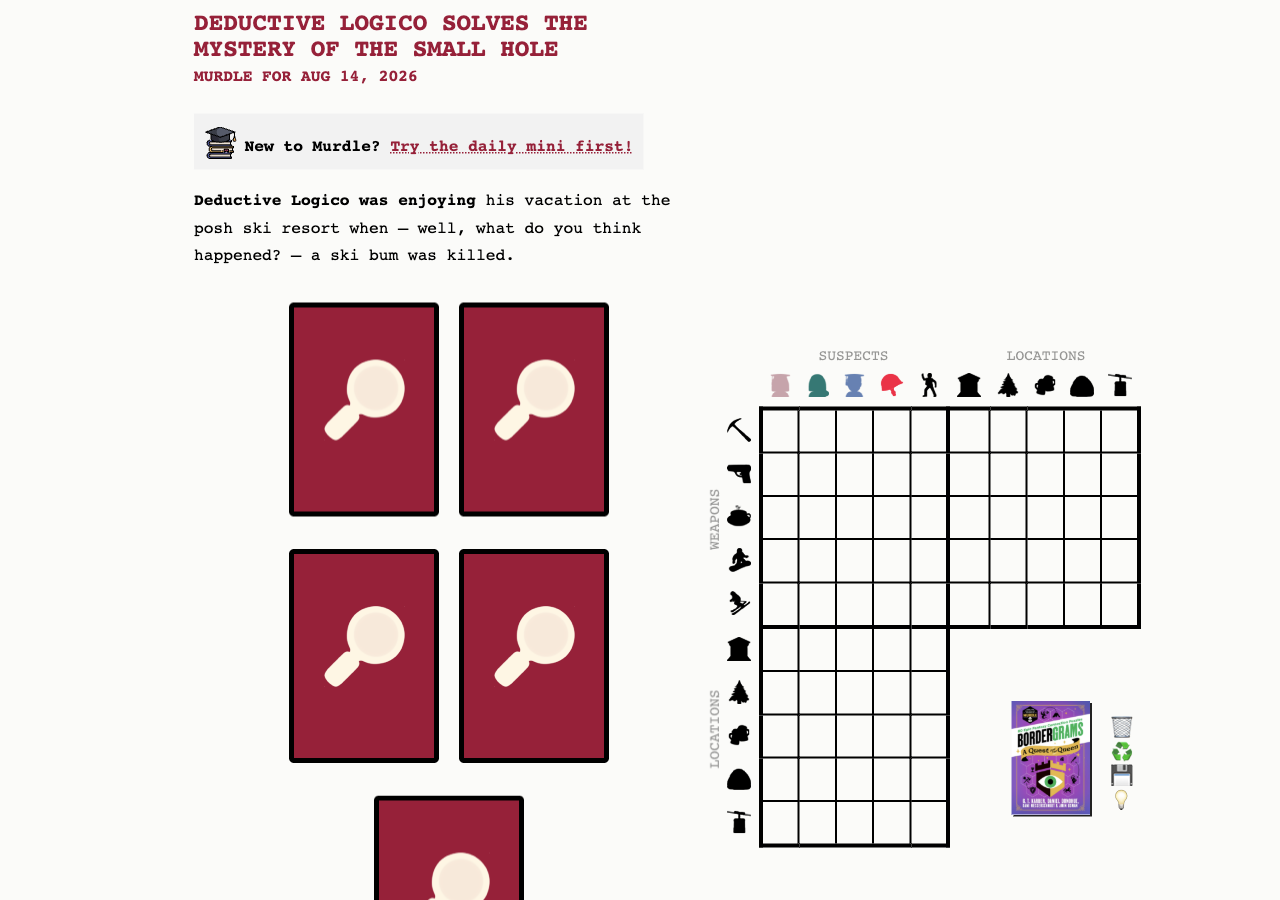
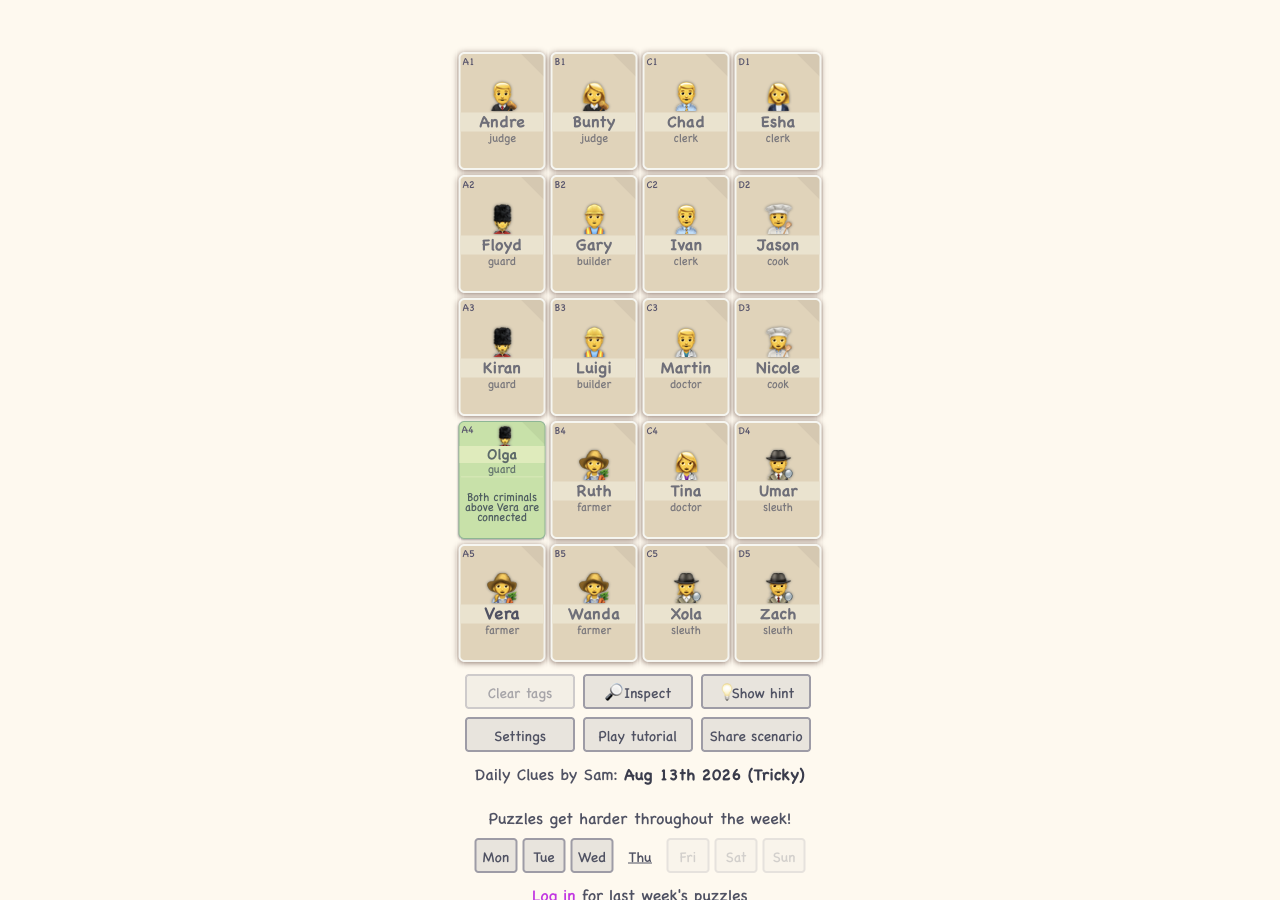
Pips isn’t really a guessing game once you understand it: the regional constraints narrow the board down to one valid solution, and progress comes from ruling placements out rather than trying combinations at random. Murdle and Clues by Sam both run on that same principle in different clothing. Murdle drops you into a fresh case each day, someone to identify, a weapon to pin down, and a place to confirm, worked out through claims that are each independently true or false, so solving it is elimination from the first line to the last, with nothing guessed at any point. Clues by Sam runs the same kind of elimination over a lineup of suspects and clue cards, with the week ramping in difficulty the way a crossword does, easy on Monday and considerably less so by the weekend. Both are listed on the complete list of dle games.
enclose.horse, for the placement side instead
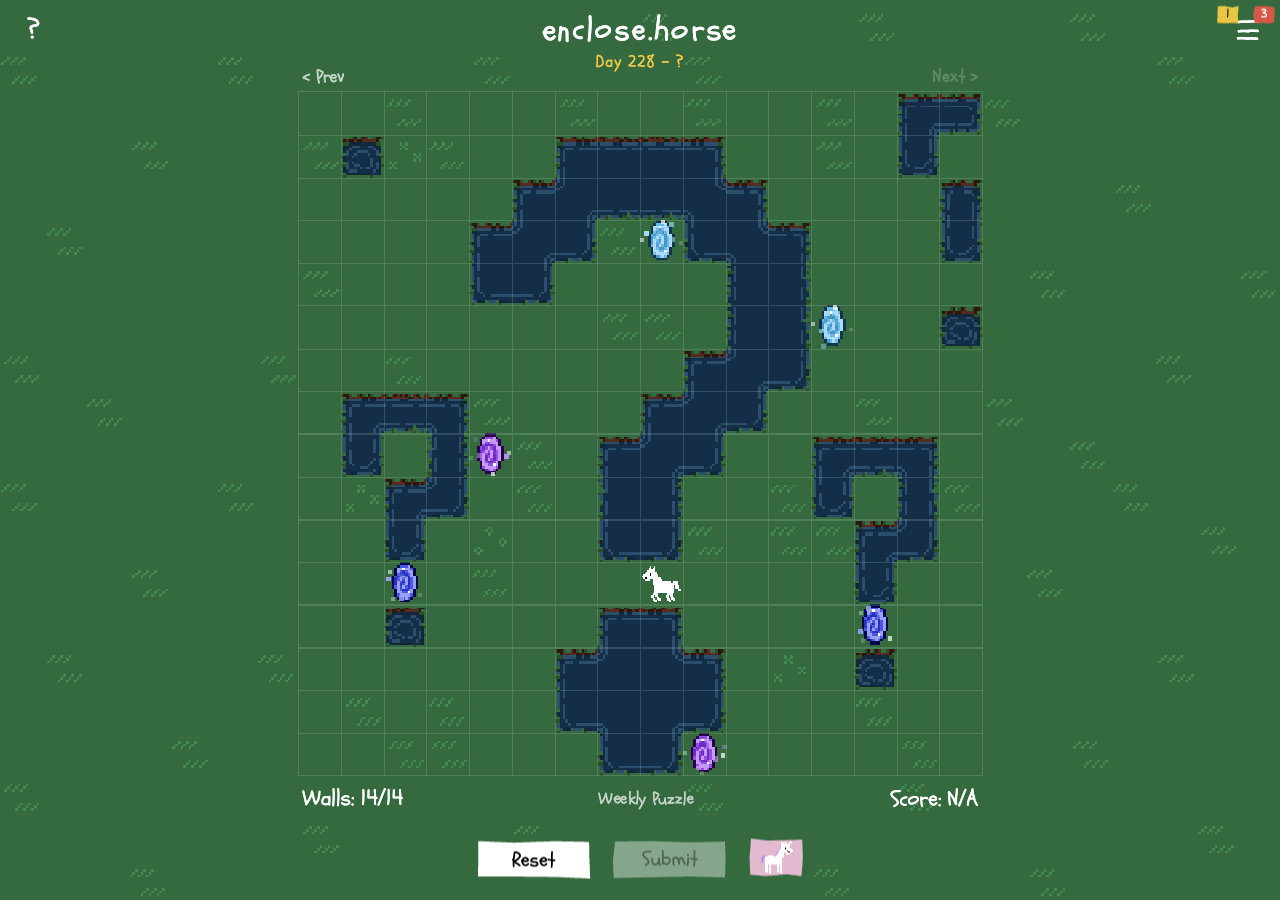
If it was the physical fitting rather than the ruling-out that hooked you, enclose.horse trades deduction for geometry: a horse wandering the board, a capped number of walls to drop, and a score built from however much grass you’ve fenced in before it slips through a gap and gets away. Everyone plays the same board with a single submission and no retries, closer to a placement puzzle than a guessing round. Find it on the roundup of dle games as well.
Games Like Immaculate Grid
Immaculate Grid takes the row-and-column intersection format and points it at sports history instead of words or numbers. A nine-cell board sits in front of you, one label running along each row and a different one along each column, some combination of team, season, or statistical feat, and the task is naming someone whose career fits both labels for a given cell. Separate grids run daily across several major sports, and the trivia leans as heavily on obscure roster history as on remembering star names. Unlike the three games above, it comes from Sports Reference rather than the New York Times. Its own script bundles turned up the same zero paywall hits Pips did when the identical scan ran against them.
Playing logged out, no login wall shows up anywhere: the instructions modal, the grid, and the guess counter all render freely, the same open access Pips gets above. Answers go in through a search box with autocomplete rather than a dropdown, and typing part of a name narrows a live list of matching players to click. What actually rations a free player is guesses, nine of them, shared across the whole grid rather than reset per cell, and a wrong name costs one exactly the way a right one does. Running a grid down to that budget surfaces its own scoring screen, a count correct out of nine plus a rarity score, with cells still open to fill in afterward for fun since only the first nine guesses count toward the result.
Here is a full round, filled in as it happened:
Video transcript
Nine squares, nine guesses. That is Immaculate Grid. Each one wants a player who fits the badge on its left and the label above it. A wrong answer spends a guess just the same, so nine is the entire budget. Nine for nine. The board comes back immaculate.
The cost here is guesses rather than money, the same shape as Pips just counted differently: one shared budget of nine tries per grid instead of one board per difficulty per day. What we can add below is where to look if the sports-trivia angle isn’t quite your itch, or if you’d rather the same intersection format ran on a different subject entirely.
PokeDoku, the identical grid on a different subject
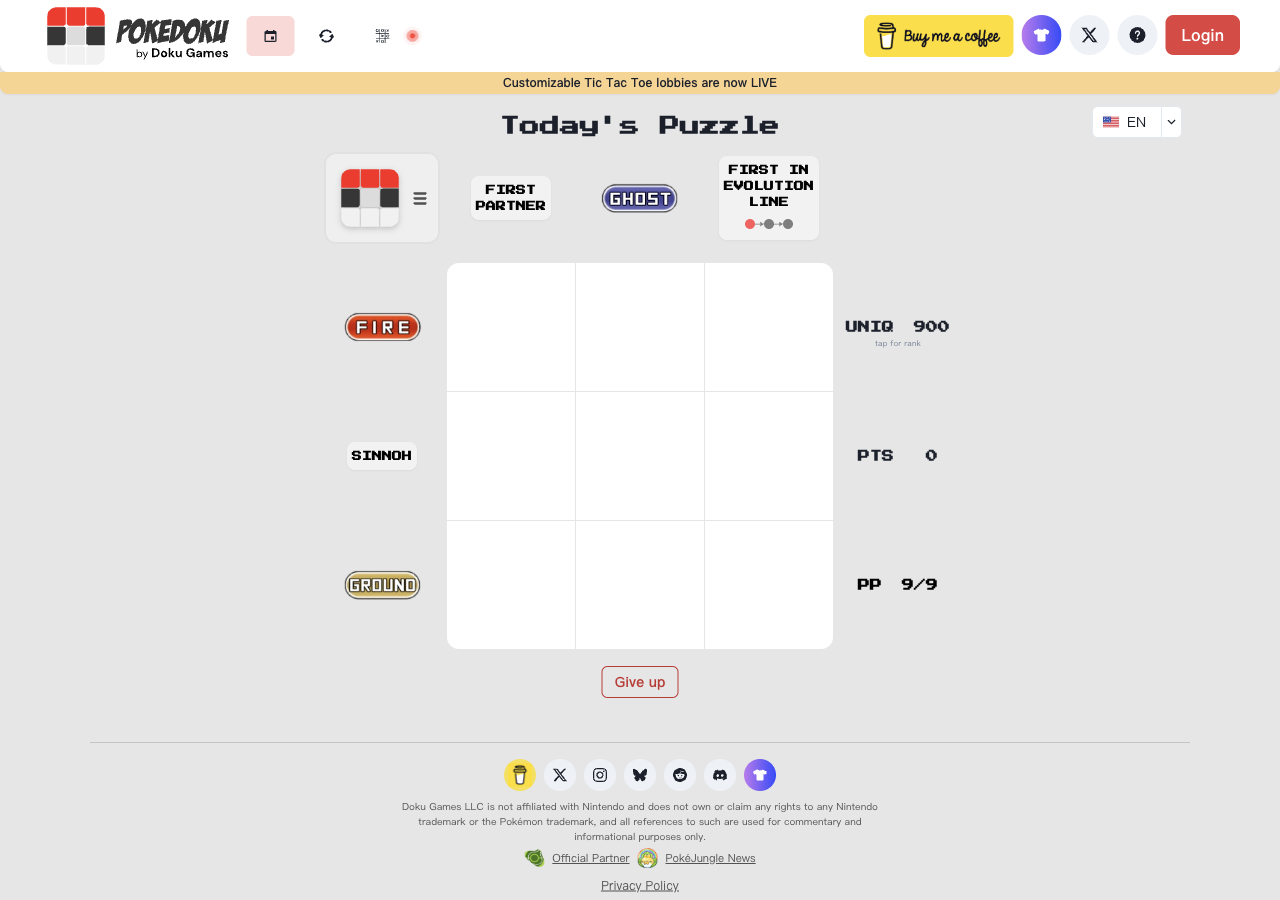
Swap the athletes for Pokemon and the shape barely moves: nine cells, a category spanning each row and each column, one answer that has to satisfy both simultaneously. Where Immaculate Grid rewards deep sports history, PokeDoku rewards knowing the National Dex cold, generation by generation. It’s on the dle games hub.
Poeltl, for the same crowd with a different mechanic
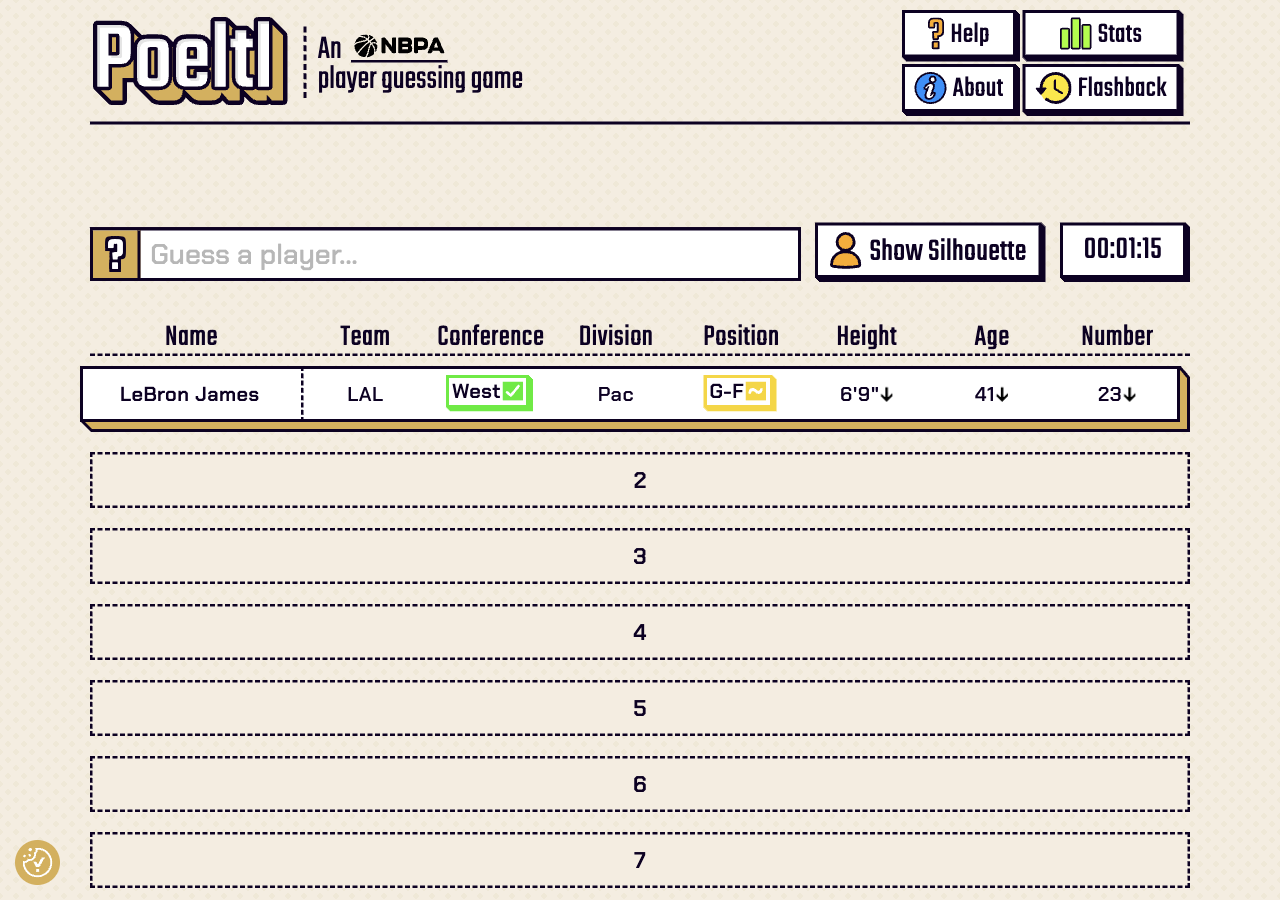
Worth being precise about rather than stretching the comparison: Poeltl runs on a single mystery NBA player rather than a grid, and each name you try returns a table of comparisons, team, conference, height, and more, every one flagged right, wrong, or close. What it shares with Immaculate Grid is the audience rather than the mechanic: players who’d rather reason through a roster than sort sixteen tiles or guess a spelling. Also on the list of dle games.
NYT Games Alternatives at a Glance
| Alternative | Replaces | Shared trait | Archive or practice |
|---|---|---|---|
| Squaredle | Spelling Bee, Letter Boxed | open-ended hunting, sustained focus | Yes |
| Poople | Letter Boxed | word-to-word chain | Unlimited practice mode |
| Weaver | Letter Boxed | word-to-word chain | Some |
| Murdle | Pips | pure deduction | Books only |
| Clues by Sam | Pips | pure deduction | Free login |
| enclose.horse | Pips | spatial placement | No |
| PokeDoku | Immaculate Grid | 3x3 row/column intersection | Practice mode only |
| Poeltl | Immaculate Grid | sports-trivia audience | No |
Frequently Asked Questions
Are these NYT Games alternatives free to play?
Yes, though the honest answer depends on which game you mean. Spelling Bee lets a free player in for a real session before a subscription wall interrupts it partway through. Letter Boxed blocks entry entirely, no board at all without an account. Pips and Immaculate Grid both showed no paywall of any kind when we checked their code directly, Pips straight from NYT and Immaculate Grid from Sports Reference. Every alternative here, Squaredle, Poople, Weaver, Murdle, Clues by Sam, enclose.horse, PokeDoku, and Poeltl, costs nothing to play its own daily round.
Is Spelling Bee actually free?
Partly. Logged out on August 13, 2026, we played the day’s puzzle to 30 of a possible 182 points, rank “Solid,” across ten real words, before a subscription wall interrupted the session with the message “Subscribe to keep playing.” That’s a genuine sitting rather than a token taste, though it stops well short of the top of the scale. If the open-ended word hunt is what you’re after without a ceiling, Squaredle runs the same kind of session with no rank wall at the end of it.
Why can’t I play Letter Boxed without an NYT Games subscription?
Because Letter Boxed gates access before the puzzle even loads, rather than partway through a session the way Spelling Bee does. Visiting logged out shows no board at all, embedded page data marked isFree as false, and body copy reading “Subscribe to play Letter Boxed.” If the letter-chain structure is what draws you to it, Poople and Weaver run the same chaining idea at the word level, and Squaredle matches the sustained, single-board focus instead.
Is Pips free to play?
Yes, as far as we could verify. The public endpoint that serves each day’s board carries no subscription flag of any kind, and a direct scan of every script the game’s page loads turned up zero paywall strings, the same check that correctly found Spelling Bee’s real wall when it ran against that game first. NYT still only publishes one board per difficulty per day, so the limit on Pips is timing rather than money. Murdle and Clues by Sam match its deduction-only structure, and enclose.horse matches the daily, one-shot placement feel.
What is Immaculate Grid, and is it free?
Immaculate Grid is a nine-cell board where each square sits at the intersection of a row label and a column label, usually a team, season, or statistical feat, and you name a player whose career satisfies both. It comes from Sports Reference rather than NYT. Logged out, it’s fully playable: no login wall, answers go in through a search box with autocomplete, and a free player gets nine guesses shared across the whole grid, wrong answers included, before the round ends and a score comes up. PokeDoku runs the identical row-and-column format over Pokemon instead of athletes, and Poeltl serves the same sports-focused crowd with a single mystery player guess instead of a grid.
What’s the highest possible score in Spelling Bee?
It changes every single day, because it’s tied to that day’s specific answer key rather than a fixed target. On August 13, 2026, the full answer key held 39 words worth 182 points combined, and reaching the top rank, Genius, required 127 of those points. Our own logged out session that day stopped at 30 points, rank Solid, well below the Genius threshold, a reminder that the score reported for any given day is entirely a function of how many words that day’s letters happen to allow.
Where to Play Next
None of the eight alternatives above have to be the last stop. Our complete dle game directory rounds up every daily puzzle we’ve tried and reviewed, sorted into categories that go well past spelling and letter games into geography, sports trivia, and pure logic. For the letter-guessing branch of the NYT lineup, games like Wordle and games like Connections cover the two puzzles that place no limits on free players at all. The best daily word games breaks the whole category down by mechanic instead of by publisher.
For a puzzle with no subscription screen anywhere in it, Poople runs one every day: start on a word, trade one letter for another with every move, and land on POOP by the finish, no rank to chase and no session that stops before you’re done. If the daily round isn’t enough puzzle for one sitting, Poople Unlimited has more waiting anytime.